题目:Creative Design of Parallel Mechanisms: From Single-Mode to Multi-Mode
时间:2025年12月16日 10:30-11:30
地点:机械与动力工程学院 F210会议室
邀请人:高峰 教授,何俊 教授(重大装备设计与控制研究所)
Biography
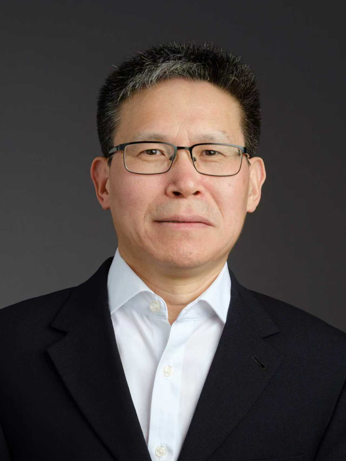
Dr. Xianwen Kong is an Associate Professor at Heriot-Watt University, UK, and a member of the Edinburgh Centre for Robotics—a joint initiative between Heriot-Watt University and the University of Edinburgh. His research focuses on mechanisms and robotics, with particular emphasis on the creative design of parallel mechanisms and their applications in advanced manufacturing and renewable energy.
Dr. Kong has authored or co-authored a monograph (with Prof. C. Gosselin) published by Springer, two U.S. patents, and more than 200 papers in leading journals and conference proceedings. His monograph has been translated into Russian by FIZMATLIT – Nauka Publishers and into Chinese by China Machine Press in 2012 and 2013, respectively.
He currently serves as an Associate Editor for Mechanism and Machine Theory and sits on the editorial board of the Chinese Journal of Mechanical Engineering. Previously, he was an Associate Editor for the ASME Journal of Mechanisms and Robotics, Mechanical Sciences, and IEEE Robotics and Automation Letters. From 2010 to 2022, he was an elected member of the ASME Technical Committee on Mechanisms and Robotics.
Dr. Kong’s contributions have been recognized with several prestigious awards, including the 2012 Freudenstein/General Motors Young Investigator Award, the 2020 A.T. Yang Memorial Award in Theoretical Kinematics, and the 2024 ASME Leonardo da Vinci Award.
Abstract
Parallel mechanisms have been a focal point of research for over three decades, driven by demands for high precision and large payload capacity. Since 2007, the field has progressed from single-mode designs to multi-mode configurations, enabling mechanisms to adapt seamlessly to changing production requirements and environmental conditions. Multi-mode parallel mechanisms reconfigure between multiple operational modes without disassembly and with minimal actuators. A single multi-mode mechanism can replace two or more conventional designs, significantly reducing changeover time. This talk begins with an overview of the creative design of conventional parallel mechanisms, followed by the introduction of a virtual-chain approach for innovative design. It then presents a systematic construction method for developing multi-mode parallel mechanisms. Finally, the presentation explores reconfiguration analysis using quaternions and advanced tools from computer algebraic geometry, providing deeper insights into the kinematic behaviour of multi-mode parallel mechanisms.
 学院OA系统
 jAccount登录
 ENGLISH


 地址:上海市东川路800号上海交通大学闵行校区机械与动力工程学院
 邮编:200240
 Email:sjtume@sjtu.edu.cn